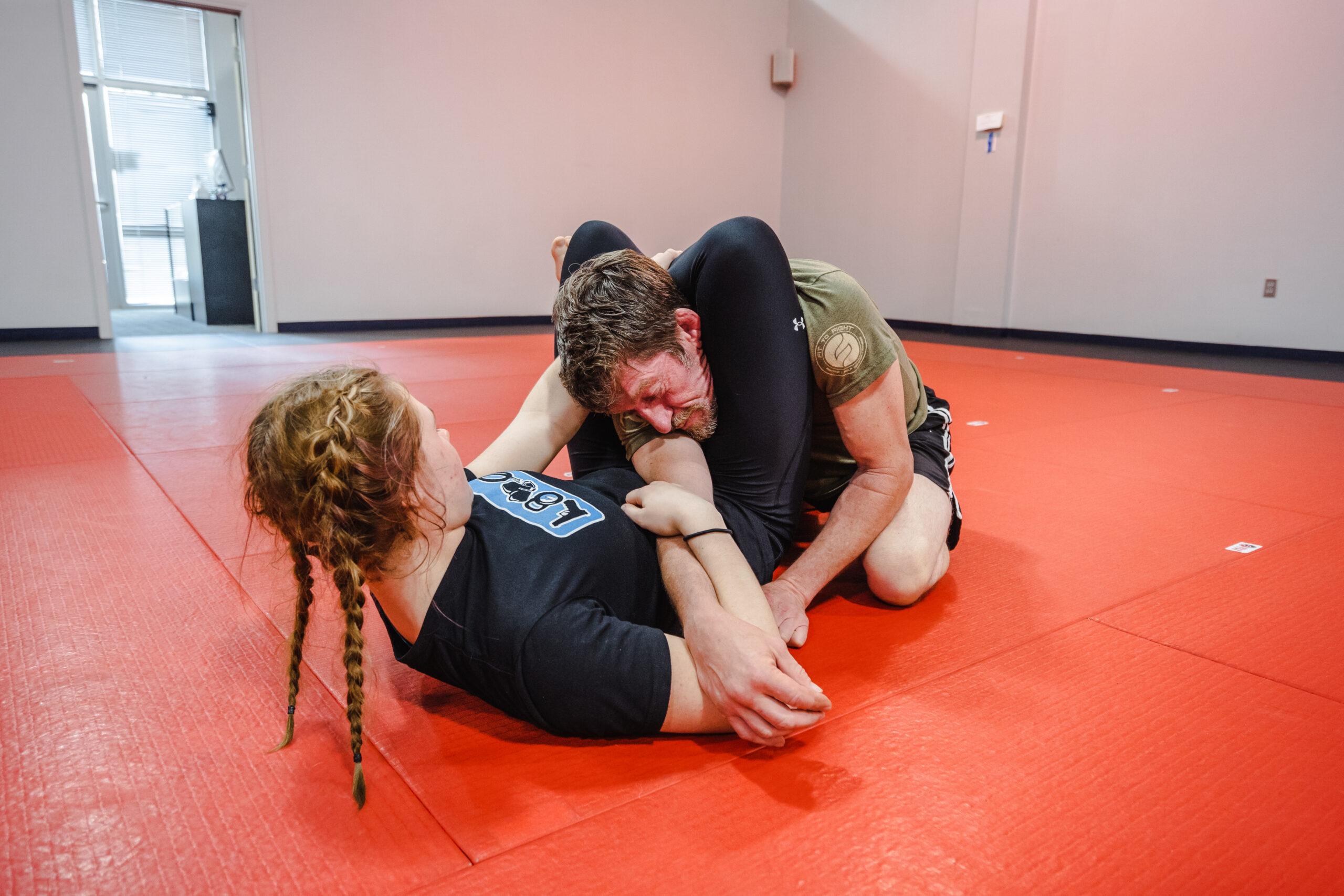
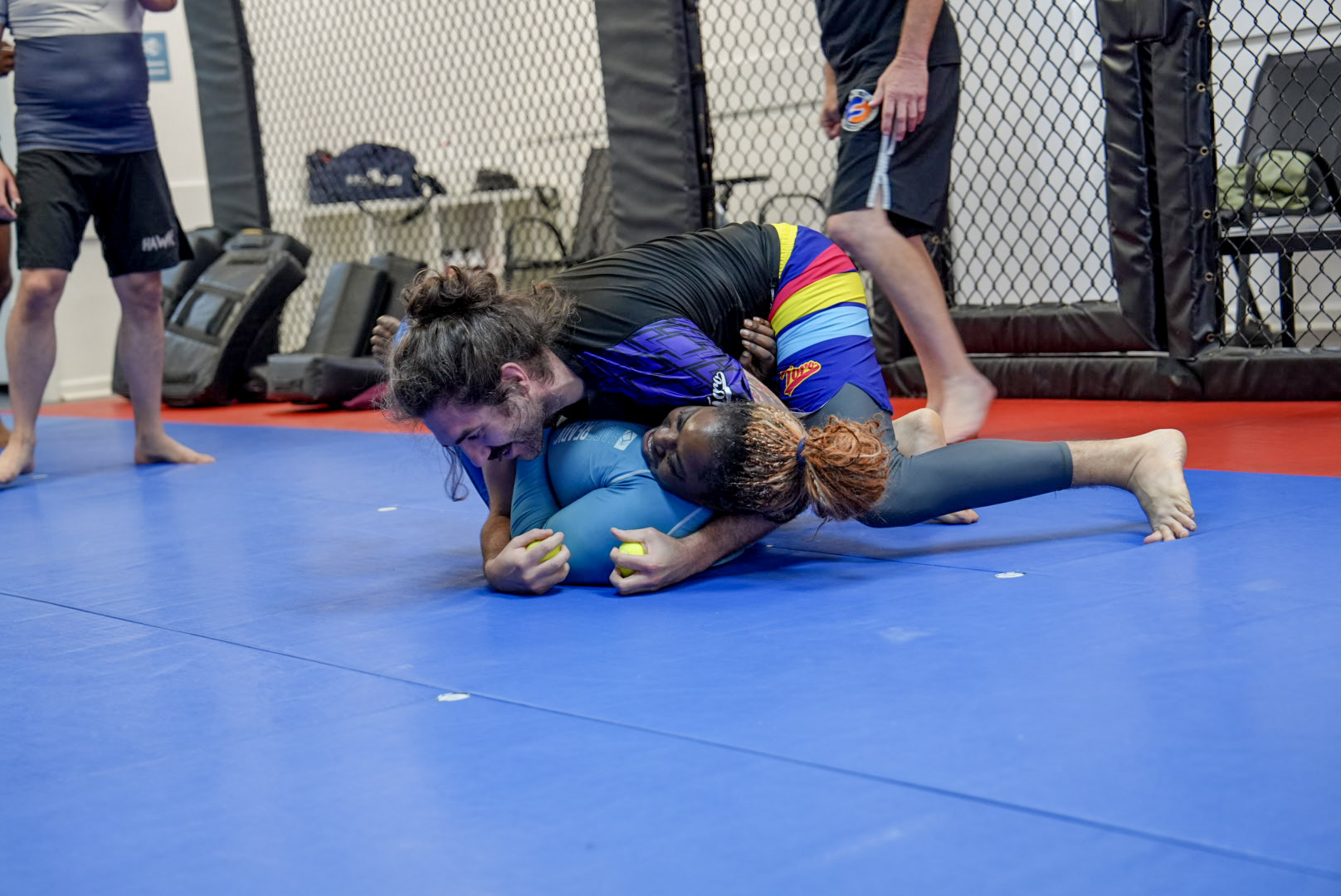
Brazilian Jiu-Jitsu works. The question is: what are you optimizing it for?
Most gyms have answered that question by default. Competition culture fills the vacuum. Points, podiums, rule sets, and the assumption that “better at sport BJJ” equals “better prepared for reality.”
It doesn’t; not the way they say it does, and pretending otherwise is how people end up with skills that don’t transfer.
Competition is a Subset, Not the system
Sport BJJ is a legitimate expression of grappling. It sharpens timing, develops conditioning, and forces problem-solving under pressure within a specific rule set. However, competition is a subset of grappling, optimized for a narrow context with defined boundaries, referee intervention, and outcomes determined by points.
Confusing the subset for the whole produces incomplete grapplers.
Self-defense grappling answers different questions:
What happens when distance collapses and you’re not ready?
What happens when you fall or get taken down?
What happens when size, age, fatigue, or injury matter?
What happens when escape, not domination, is the only rational priority?
What happens when there are no rules, no ref, and no reset?
Those aren’t sport questions. They’re real-world ones, and they require a different training emphasis.
What changes when context changes
When self-defense and longevity drive the curriculum, the priorities shift immediately. We emphasize:
Positional dominance over submission hunting
Top pressure, framing, and posture
Standing awareness and controlled disengagement
Pinning, escaping, and getting back up
Strikes-aware positioning and distance management
Breathing, pacing, and composure under pressure
Joint health and intelligent intensity scaling
We de-emphasize:
Point accumulation strategies
Athletic scrambling for advantage
Techniques that only “work” within specific rule sets
Ego-driven rolling that mistakes intensity for intelligence
Training volume that quietly erodes the body
You won’t see us chasing highlight-reel techniques or building curriculum around tournament prep cycles. You’ll see people learning to stay calm, think clearly, and move efficiently when they’re uncomfortable, which is the only time these skills matter.
Ryan Hoover is a Brazilian Jiu-Jitsu black belt, certified Scientific Wrestling coach, and the founder of Fit to Fight®.
He didn’t come to grappling to chase belts or build a competition record. He came asking a practical question: What happens when distance collapses, rules disappear, and escape matters more than points or submissions?
Most BJJ programs optimize for sport: guard retention, submissions, competition strategy. Ryan built something different: grappling as a capability system for real-world contexts. Positional dominance. Disengagement. Environmental awareness. Composure under pressure.
His system, GROUNDED™ Combat Grappling, reflects decades of training across Brazilian Jiu-Jitsu, wrestling, and MMA, synthesized into a framework that prioritizes control without escalation, restraint when possible, and decisive action when necessary.
He teaches people to be harder to harm, without making grappling their identity or requiring them to adopt a combat-sport lifestyle